
How the Right Building Can
Change the Way a Property
Works
A building can do more than sit on a piece of land.
When it is designed well, it can change the way the entire property functions. It can make daily work easier, protect valuable equipment, create better organization, support a business, and open up new possibilities for how the land is used.
For property owners across Washington, Oregon, and Idaho, a post-frame building is often the structure that helps everything else work better.
It may start as a need for storage, parking, or workspace. But once the building is complete, it often becomes one of the most important parts of the property.
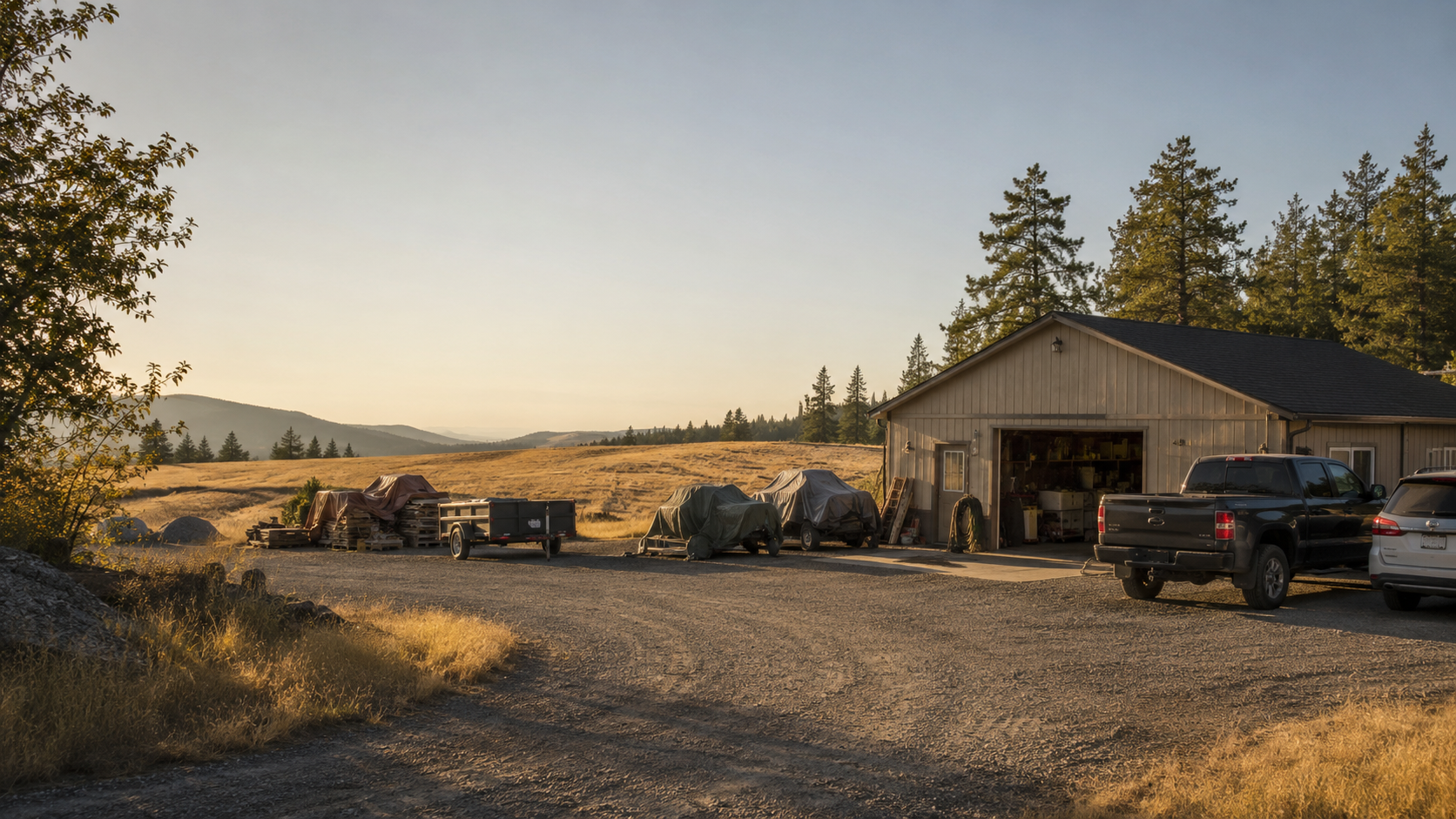
The Right Building Reduces Daily Friction
Every property has small frustrations that show up over time.
Equipment is hard to access. Tools are stored in too many places. Vehicles are exposed to weather. Projects take longer because the workspace is not set up properly. Trailers have to be moved before other items can be reached. Storage areas slowly become crowded and inefficient.
These problems may seem small on their own, but they add up.
A well-designed shop, garage, barn, or post-frame building can reduce that daily friction. It creates a central place for the things a property owner uses most. It allows space to move, store, repair, build, and organize.
When a structure is planned around real use, the property becomes easier to operate.
A Building Can Create Better Flow
Good property flow is not always obvious until it is missing.
A building might look nice from the outside, but if the doors are in the wrong place, the driveway is too tight, or the layout does not support equipment movement, the space can become frustrating quickly.
Traffic flow matters.
Trucks, trailers, tractors, recreational vehicles, delivery vehicles, and everyday parking all need to be considered before construction begins. The way someone enters the building, turns around, loads materials, parks equipment, or accesses storage can affect how useful the structure feels.
For rural properties in Washington, Oregon, and Idaho, this is especially important. Long driveways, uneven ground, snow, mud, slopes, and seasonal weather can all affect access.
A good building should improve movement across the property, not interrupt it.
More Space Can Create More Opportunity
Many people think about a new building in terms of what they need right now.
They need a place for tools. They need covered parking. They need storage for equipment. They need a workshop. They need protection from weather.
Those needs matter, but a new building can also create room for what comes next.
A shop may allow a property owner to take on more projects. A garage may protect vehicles and free up space in the home. A barn may support agricultural use, livestock needs, or equipment storage. A larger post-frame structure may give a small business the room it needs to operate more efficiently.
When planned well, a building can create flexibility.
It gives the property owner options they did not have before.
Organization Changes How a Property Feels
There is a difference between having space and having useful space.
A crowded property can feel overwhelming, even if there is plenty of land. When everything is spread out, stacked, exposed, or stored wherever it fits, the property can become harder to manage.
A well-planned building brings order.
It gives tools, vehicles, machinery, inventory, supplies, and seasonal items a proper place. It can separate work areas from storage areas. It can create zones for specific uses. It can make the property feel more intentional and less reactive.
This can be especially valuable for property owners who use their land for both personal and practical purposes.
When the building supports the way the property is actually used, the entire space feels more functional.
The Structure Should Fit the Climate
Buildings in the Northwest need to be designed with the region in mind.
Moisture, snow loads, wind exposure, freezing temperatures, heat, and seasonal weather shifts all influence how a structure should perform over time.
A building that works well in another region may not be the right fit for a property in Coeur d’Alene, Sandpoint, Yakima, Pasco, or surrounding communities throughout Washington, Oregon, and Idaho.
Insulation, ventilation, door placement, drainage, roof design, and material choices can all affect long-term comfort and durability.
The right building should not only look good when construction is complete. It should continue performing well through changing seasons.
A Thoughtful Build Supports Long-Term Value
A post-frame building is a practical investment, but it can also add long-term value to a property.
Useful, durable structures make land more functional. They protect equipment and vehicles. They support better organization. They create space for work, storage, business, agriculture, or recreation.
The value is not only in the square footage. It is in how much better the property works because of it.
That is why thoughtful planning matters from the beginning.
Size, placement, access, materials, door height, utilities, and future use all shape the final result.
Final Thoughts
The right building can change the way a property is used every day.
It can make work easier, storage cleaner, equipment safer, and the land more functional overall. For property owners in Washington, Oregon, and Idaho, a well-designed post-frame building can become the structure that supports everything else happening on the property.
At Quality Structures One, every build is planned with long-term function in mind. Whether the project is a shop, garage, barn, barndominium, agricultural building, or custom post-frame structure, the goal is to create a building that works with the property and serves the owner for years to come.